



Planting Larch: A Step-by-Step Guide for UK Gardens and Small Woods
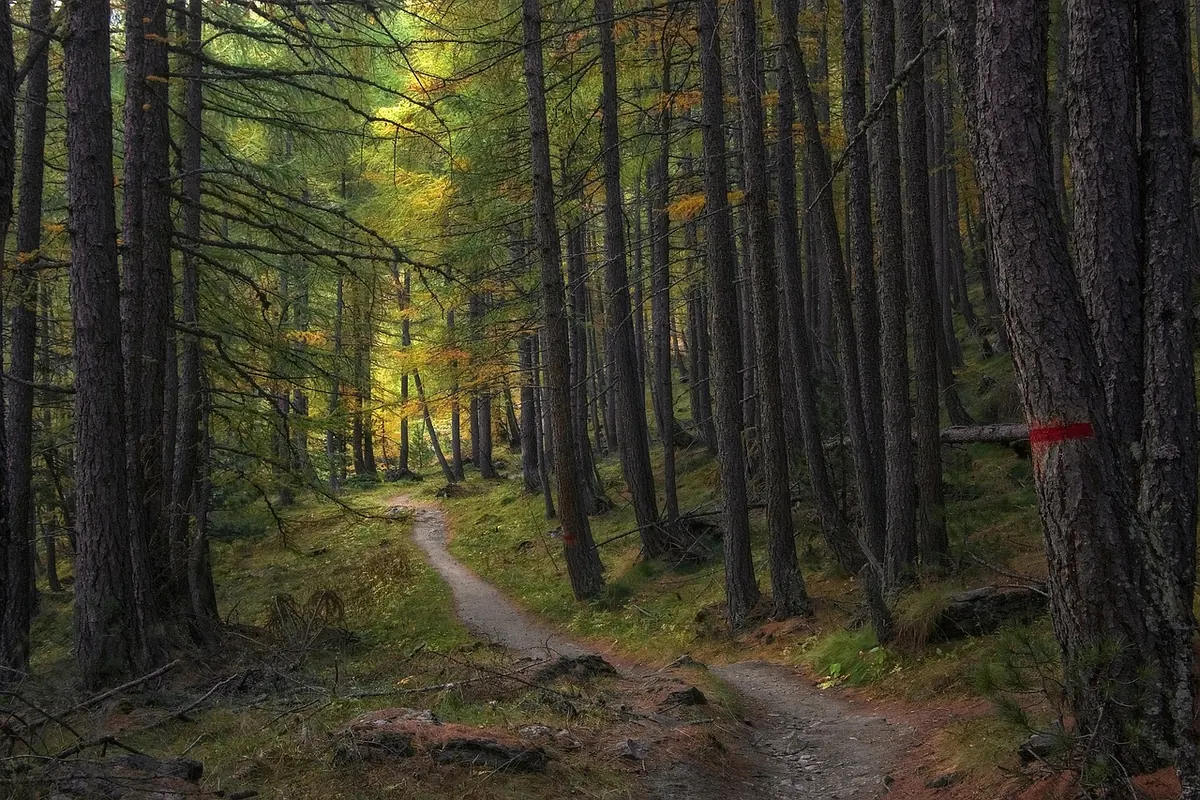
Larch is the conifer that breaks the rules. Its needles turn gold in October and drop, leaving a bare skeleton through the winter, and by April the branches are thick with soft green brushes again. That annual disappearing act makes larch one of the loveliest trees you can plant in a large garden, and its speed of growth, light shade and sturdy timber make it one of the most useful trees in a small wood.
The basics are straightforward, but larch is less forgiving than it looks about wet ground and competition from grass. Get the site right, plant while the trees are dormant, and keep the weeds down for three summers, and you will have a tree that outpaces almost anything else on the plot.
Why larch earns its place
Few conifers grow as fast on a decent site. A well-planted, well-weeded larch can put on close to a metre a year through its first decade, and it keeps going. The timber is strong for its weight and moderately durable, which is why it turns up in fence posts, cladding, gates and boatbuilding. If you are planting for firewood, larch dries quickly and splits cleanly; if you are planting for structure, its trunk stays straight in a crowded crop.
The foliage is feathery and light, so grass and other plants grow right up to the trunk. That makes larch an excellent nurse for slower species such as oak and beech: it draws them up straight, then steps aside when you thin it. It is also more wind-firm than many conifers, which is why it does so well on exposed upland edges. And then there is the autumn colour. A short row of larch along a boundary in late October is worth the space on its own.
Wildlife benefits too. The seeds are eaten by red squirrels, siskins and crossbills, and the open canopy lets woodland flowers such as bluebells and wood anemone survive beneath it in a way they seldom do under dense spruce. For a garden, that means you can underplant larch with shade-tolerant shrubs and bulbs without the ground turning into a dead zone.
Choosing the right larch and the right site
Know your three kinds
European larch (Larix decidua) is the traditional tree of British estate woodlands. It suits free-draining soils, including chalky ones, and colours reliably every year. Japanese larch (Larix kaempferi) has bluer needles and a coarser look, and copes far better with heavy, damp soils, high rainfall and exposure — which is why it dominates in western Britain. Hybrid larch (Larix × eurolepis) is the most vigorous of the three and widely planted for timber. For a garden, any of them will do. For a wet, windy site, choose Japanese or hybrid.
If you are buying online, check whether the tree is bare-root or cell-grown. Bare-root larch is cheaper and plants well in winter, but the roots must never dry out. Cell-grown trees can be planted a little later in spring, though they are more expensive and need careful watering in their first summer.
What larch needs from the ground
- Full sun. Larch is shade-intolerant and will not thrive under an existing canopy. Plant it in the open.
- Free-draining soil. This is the deciding factor. Larch hates winter waterlogging; roots sitting in a soggy hole will die or sulk for years.
- Room to grow. A mature larch can reach 25 m or more. Give a specimen the best part of 10 m of clear space, well away from drains, boundaries and overhead cables.
- Shelter from salt. Larch is fine across most of Britain, but right on an exposed coast, salt-laden wind will scorch and deform it.
- Acid to neutral soil. Larch tolerates a range of pH levels, but it grows best on slightly acid, loamy ground. Very shallow chalk over rock can be too dry, and heavy clay that sits wet in winter is the worst case.
One check before you order
Larch is a host of Phytophthora ramorum, a disease that has led to large-scale felling in parts of western Britain. Because of this, planting larch is restricted or discouraged in some areas, and there are rules about moving larch material. Before you order trees — particularly in Wales, western Scotland, south-west England and Northern Ireland — check the current position with the forestry authority for your part of the UK, and buy from a nursery that can tell you where its stock came from. For anything larger than a garden planting, take advice from a professional forester.
Getting the spacing right
Spacing depends entirely on why you are planting.
- For timber: roughly 2 m by 2 m, which is close to 2,500 stems to the hectare. Larch likes company when young and draws itself up in a tight crop.
- For a small mixed wood: plant larch in groups or alternate rows among oak, beech or birch, at 2 m between larch and 3–4 m to the broadleaves. The larch acts as a nurse, and you can thin it out once the slower trees have established.
- For a shelterbelt or windbreak: plant at 1.5–2 m spacing in a double row, offsetting the rows so the wind cannot funnel straight through. Keep the outer row lower by pruning or choosing a shrubby species.
- For a garden specimen: one tree is usually enough. Give it at least 8–10 m from the house, patio, driveway and boundary, and check for underground services before you dig.
If you are planting a small area by hand, mark the spots with canes first. It is far easier to adjust a cane than a half-planted tree.
Planting, step by step
- Plant in the dormant season. November to March is ideal, avoiding frozen ground, waterlogged soil and very windy days. Bare-root trees must go in before they break bud in spring.
- Clear a circle. Remove grass, nettles, brambles and weeds in a metre-wide circle around each planting spot. Grass is the young larch's main enemy, so do not skip this.
- Dig a hole. Make it wide enough to spread the roots without bending them, and just deep enough that the root collar — the point where the roots meet the trunk — sits at ground level. Do not bury the stem.
- Position and firm. Spread the roots, backfill with the original soil, and firm gently with your heel. There should be no air pockets, but do not compact the soil into concrete.
- Protect the tree. Fit a rabbit guard or tree shelter if deer, rabbits or hares are about. A short stake may help on a very exposed site, but keep ties loose and remove them within a few years.
- Mulch. Spread a 5–8 cm layer of bark chip or well-rotted woodchip over the cleared circle, keeping it a few centimetres clear of the trunk. Mulch conserves moisture and slows weeds.
- Water in. Give the tree a good soak after planting, even in winter. In a dry spring, water weekly for the first few months.
Aftercare: the first three summers
The first three years decide whether your larch thrives or merely survives. Keep the planting spot completely free of grass and weeds, either by hand-weeding, hoeing or topping up the mulch. A strimmer can ring-bark a young tree in seconds, so keep it well away or use a guard.
Water young trees during drought, especially on light or sandy soils. Do not fertilise: larch does not need rich ground, and extra nitrogen encourages soft growth that is more likely to be damaged by wind and late frost. Check guards and stakes each autumn, replace any failures with new plants in the next dormant season, and resist the urge to tidy the tree by cutting the leader. A larch should be left to grow a single, straight stem.
Thinning, pruning and shaping
In a small wood, larch is usually grown as a nurse crop and thinned rather than pruned. Once the canopy closes — often after 10 to 15 years — remove the weakest, forked and diseased stems first. Thin gradually, aiming for a final spacing of 5–6 m between the best trees. The thinnings make excellent stakes, firewood and rustic poles.
In a garden, larch needs very little pruning. Remove dead, broken or crossing branches in late summer or autumn, and take out any double leaders while the tree is young. Larch does not regrow reliably from old wood, so avoid cutting back into bare branches. If you want a clear trunk, remove the lowest branches a few at a time over several years rather than all at once.
Pests, diseases and biosecurity
The biggest concern is Phytophthora ramorum, which can kill larch and has triggered felling programmes in high-risk areas. Symptoms include sparse, yellowing or wilting needles, dieback in the crown, and dark resinous lesions on the trunk. If you suspect it, do not move cut material; report it to the relevant plant health authority.
Young larch can also be browsed by deer and rabbits, while aphids and larch case-bearer moths may cause cosmetic damage in some years. These are rarely fatal to a vigorous tree. The real threats are poor planting, wet roots, grass competition and buying stock from an unknown source.
Plant larch with the same care you would give an oak, and it will reward you faster than almost any other tree in the British Isles.
Larch in the wider garden and wood
Use larch where you want light, speed and structure. A row along a western boundary will blunt the wind and turn gold in October. A group in a damp corner, planted with willow and alder, will draw the eye upward and dry out the ground as it grows. In a small wood, larch can pay for itself twice: first as a nurse that straightens your oak and beech, and later as timber, poles and firewood.
It is not a tree for every site. If your ground is a wet hollow, a shaded corner or a tiny suburban plot, choose something else. But if you have sun, free-draining soil, space and a little patience with the weeding, larch will be one of the best planting decisions you make this winter.
Photo: Peggy_Marco / Pixabay
Related posts
More stories you’ll love reading