
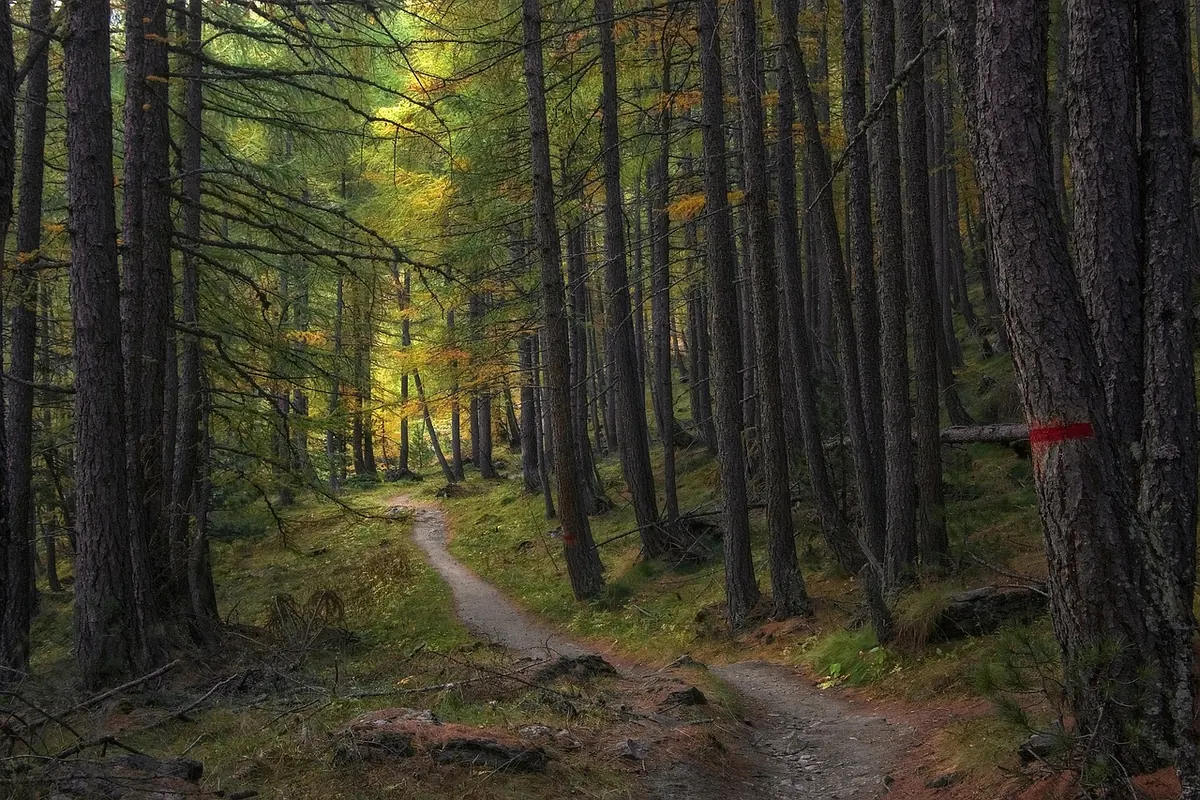
Larch is the quiet rule-breaker among British conifers. In October and November, plantations that have been grey-green all summer turn a warm, glowing gold — and then, a fortnight or so later, stand completely bare. Nothing has gone wrong. The tree is not sick, stressed or dying. It is doing exactly what larches do: shedding every needle and waiting out the winter without a single one.
Knowing why makes the colour easier to enjoy, and the carpet of fallen needles easier to deal with afterwards.
Why larch needles turn gold
Two things happen at once, and only one of them is about colour.
What is happening inside the needle
Through summer, larch needles are packed with chlorophyll, the green pigment that captures light. As days shorten and nights cool, the tree begins shutting each needle down and reclaiming what is worth keeping — nitrogen in particular — moving it back into the trunk and branches for next spring. Chlorophyll breaks down first, and that removes the green. What remains are the pigments that were there all along: the yellow and orange carotenoids. In a good year, with bright days and cool nights, the gold looks almost lit from within.
The tree also forms a small corky layer at the base of every needle, known as the abscission layer. Once it is complete, the connection is cut. That is why larch tends to shed in one determined flush rather than dribbling needles for months.
Why a conifer would give up its needles
Larch is deciduous, one of a small group of conifers — alongside dawn redwood, swamp cypress and the Chinese golden larch (Pseudolarix, which is not a true larch at all) — that drop their foliage each year.
Larch needles are thin, soft and cheap to build, and they work best in strong light. Carrying them through winter would be costly: they would lose water in cold winds, catch snow, and take damage before the growing season began. In the mountains of central Europe and the damp hills of Japan, where larch evolved, it makes better sense to grow a fresh set each spring. That trade-off is why larches thrive on thin, exposed, high ground where many evergreens struggle.
Timing: what a British autumn does to larch
The change starts earlier than most people expect. In the Highlands, the Pennines and Welsh hill ground, larches begin to turn in late September and are often at their best in the first half of October. Lowland and southern trees lag behind, sometimes by three or four weeks. Altitude and exposure matter more than species: a larch at 400 metres in Perthshire will usually be bare before one in a sheltered Devon valley has finished colouring.
Weather shifts the date from year to year. A dry, sunny September with cool nights tends to bring a clean, bright gold. A wet, mild autumn gives a duller, muddier tone and a slower drop, with some needles clinging into December. Expect roughly two to three weeks between the first hint of yellow and a bare tree.
A note on the different larches
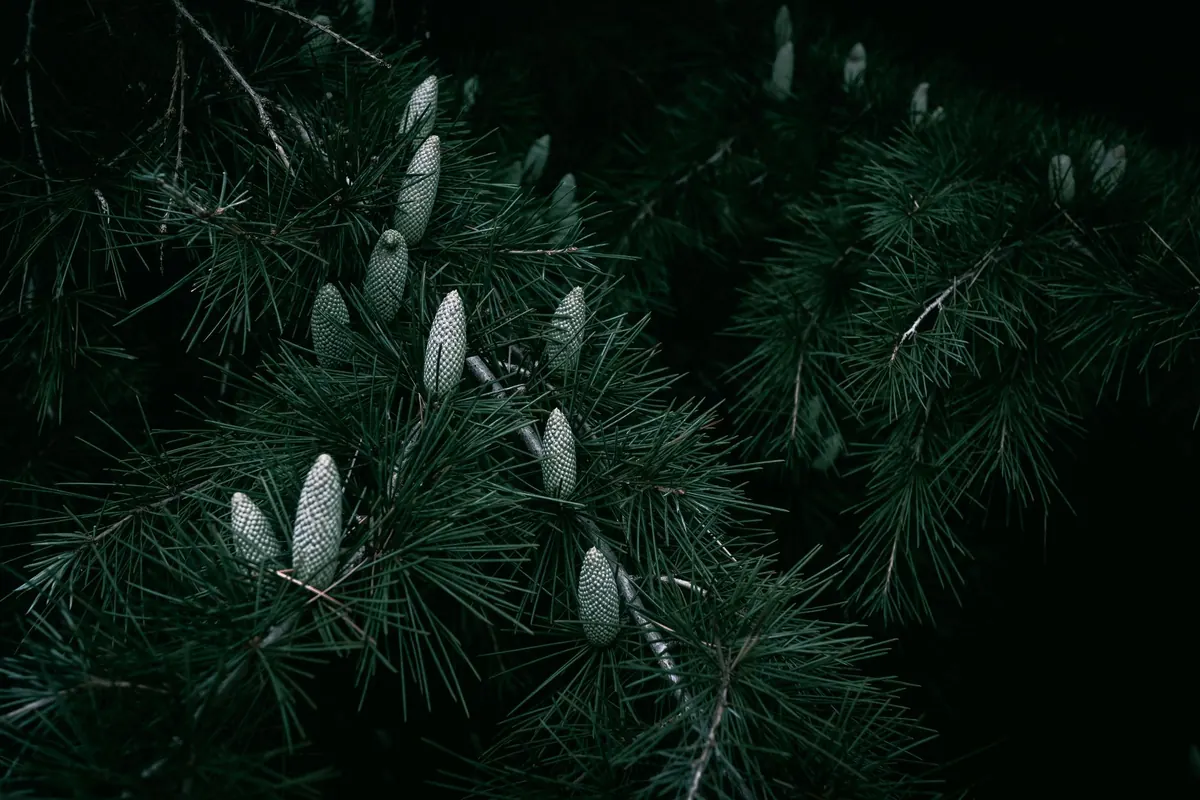
European larch (Larix decidua) turns a deep, warm gold and holds a stiff, upright habit. Japanese larch (Larix kaempferi) has bluer summer needles and often colours to a coppery orange-gold before fading duller. Hybrid larch, the Dunkeld larch widely planted in Britain, sits somewhere between the two and colours reliably. In a garden the exact shade matters less than the fact that you get two seasons from a conifer.
Autumn jobs that actually matter
Most larch maintenance at this time of year is clearing up and getting the tree ready for winter. The list is short:
- Rake or blow needles off hard surfaces. Wet larch needles are genuinely slippery on paths, steps, decking and drives.
- Clear gutters, gullies and drains. Needles wash into downpipes and block them far more efficiently than leaves do.
- Deal with the lawn. A thin scatter is harmless. A thick mat smothers grass and encourages moss, so rake before the rain sets in.
- Keep needles out of ponds and water butts. As they break down they stain water and add nutrients you may not want.
- Check stakes and ties. Loosen anything biting into the trunk and replace worn ties before winter gales test them.
- Water young trees if the autumn is dry. A newly planted larch in its first two or three years benefits from a thorough soak after a fortnight without rain, while the soil is still workable.
- Mulch the root zone with well-rotted compost or bark, 5–8cm deep, keeping it clear of the trunk.
- Prune with care. Dead, damaged or crossing branches can come off at any time. For anything substantial, wait until late winter or early spring and avoid large cuts in wet autumn weather, when fungal spores are about.
- Check tree guards. Rabbits and deer do most of their damage in winter. Repair or replace guards now.
What to do with all those needles
Larch needles are a decent garden material if you use them sensibly. They break down faster than pine needles and compost well when mixed with greener material — grass clippings, vegetable peelings, annual weeds. Add them in layers rather than a solid mass, and turn the heap when you remember.
As a mulch, a loose layer under established shrubs is fine. Avoid laying them thickly over alpines, small perennials or a lawn: they knit together into a water-resistant mat and smother what is underneath. Spread thinly over bare soil, most will have disappeared by late spring.
When it is not just autumn colour
Golden needles in October are normal. A larch that turns brown in July or August, or develops a thin, sparse crown with dead branches while its neighbours are still green, is telling you something else. Watch for dark, bleeding patches or sunken cankers on the trunk, resin oozing through bark, or dieback creeping from the top downwards.
In Britain, Japanese larch in particular is a host of Phytophthora ramorum, a disease that has affected larch in several regions and is subject to official controls. If
Photo: Camera-man / Pixabay
Related posts
More stories you’ll love reading