
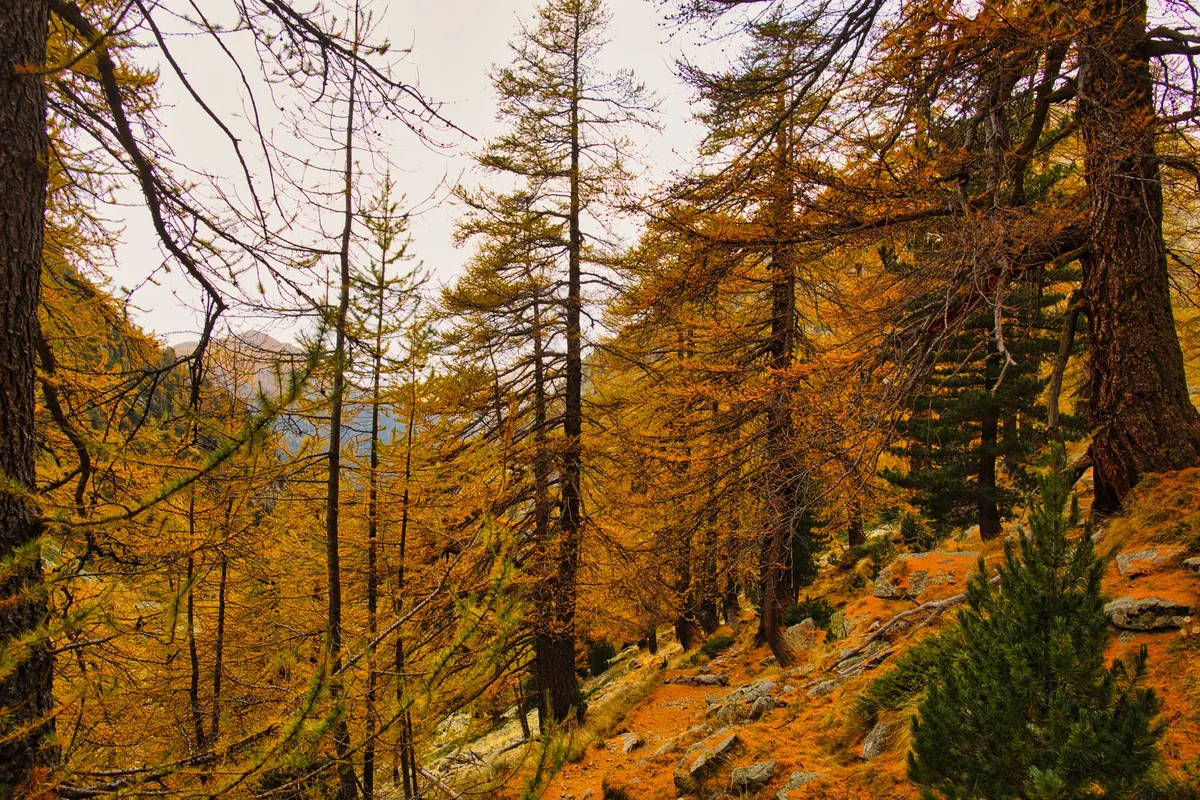
European larch and Japanese larch are the two larches most often planted in Britain, and at a distance they can look much alike: same feathery spring green, same gold in November, same bare branches through winter. Up close they are different trees with different tolerances, and the choice you make at planting time decides whether you get a vigorous crop worth felling or twenty years of watching canker take hold. Here is what actually separates them in a British wood.
How to tell them apart
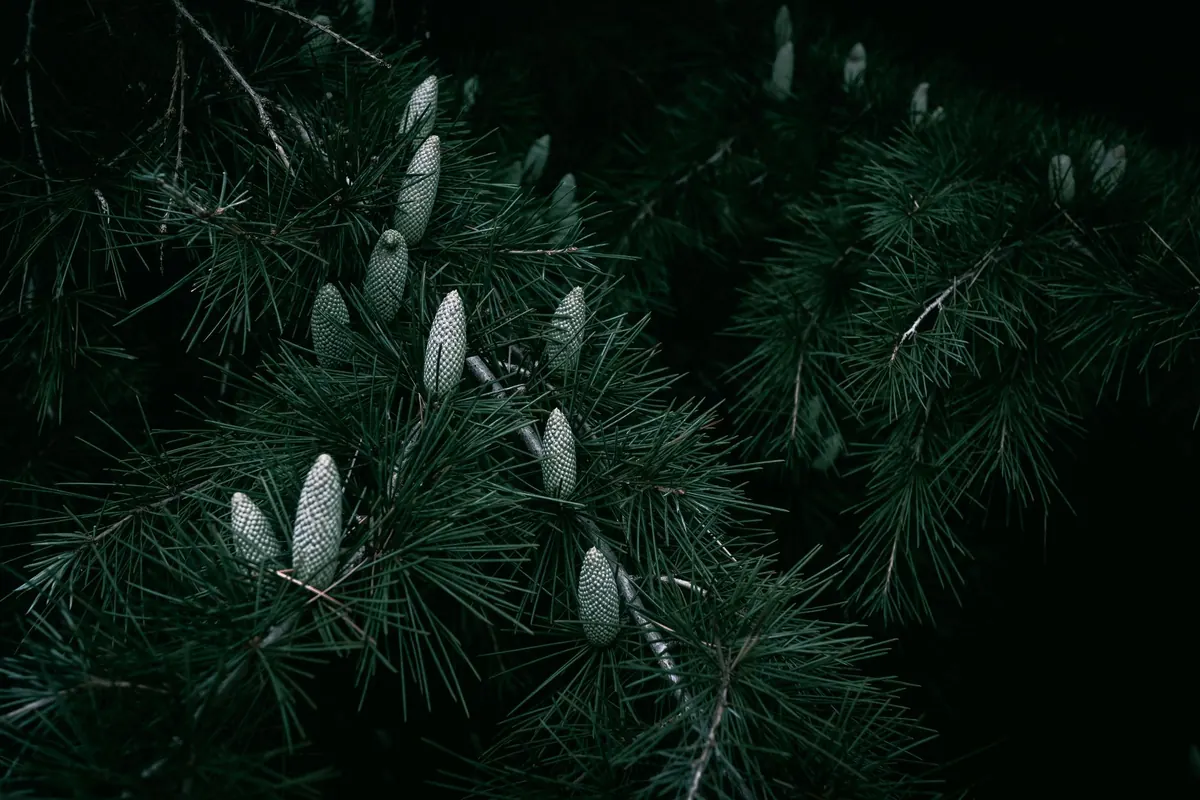
Learn the cones first, because it is the one identification feature that never lets you down.
- Cones: Japanese larch cones are egg-shaped with scales that curl outwards and back on themselves, giving a slightly untidy, rosette-like look. European larch cones have scales that lie flat and tight against the cone.
- Shoots: Japanese larch shoots are reddish-brown with a noticeable bluish-white waxy bloom. European larch shoots are slimmer and a paler, yellowish brown.
- Needles: Japanese larch foliage is greyer and bluer; European larch is a cleaner, brighter green. Autumn colour is gold in both, though Japanese larch often runs a shade more orange.
- Crown at a distance: Japanese larch is usually broader and heavier in the branch. European larch is narrower and finer. Useful as a hint, not as proof.
Growth rates and site preferences
Japanese larch is generally the faster grower, particularly on poor, wet or wind-exposed ground, where it will outstrip European larch comfortably. On a sheltered, fertile lowland site the gap narrows and European larch can hold its own. Both are light-demanding pioneers that dislike shade and will sulk under a heavy canopy.
The bigger difference is where each one comes from. European larch evolved in the mountains of central Europe, so it wants free-draining mineral soils, moving air and cold winters. That describes a lot of upland Britain, and it explains why European larch has been planted here for centuries. It is also the more tolerant of lime-rich and drier soils, which is why you still see it on chalk downland in southern England.
Japanese larch comes from the volcanic uplands of central Japan and copes with heavier, wetter, more acidic soils and poorer nutrient status. It is often the more wind-firm of the two. Its weakness is early flushing: in a frost hollow or a valley bottom, late spring frosts can scorch the new growth while European larch sits tight and waits.
Shape and form
European larch tends to produce a narrow, conical crown with fine branching on a straight stem. That light, airy canopy makes it a good nurse for oak, beech and Douglas fir, because it shelters without smothering. Japanese larch is coarser: a broader crown, heavier limbs, and a greater tendency to produce slightly ragged or forked stems on good sites. On exposed ground, though, that sturdier build often means it comes through gales in better shape while European larch gets battered and one-sided.
Disease: the factor that decides most plantings
Two diseases matter here, and they push in opposite directions.
Larch canker (Lachnellula willkommii) is a fungal canker that kills branches and distorts stems. European larch is genuinely susceptible, especially on mild, humid, sheltered sites with poor air movement, and on wet fertile soils; repeated infection ruins the timber. Japanese larch is markedly more resistant, and that resistance is the main reason it was planted so widely through the twentieth century.
Phytophthora ramorum turned that logic on its head. Japanese larch proved highly susceptible, and the discovery of infected trees in south-west England in the late 2000s led to large-scale felling across western Britain. European larch is less affected but not immune, and hybrid larch is also vulnerable. The pathogen spreads in wet, mild, windy conditions, which is why the west of the country has suffered most.
Before ordering any larch, check current plant health guidance from the Forestry Commission, Scottish Forestry, Natural Resources Wales or the equivalent body for your part of the UK. Statutory Plant Health Notices can require felling, and there are restrictions on moving larch material. If ramorum is active in your area, larch is not the tree to gamble on.
Timber quality and end uses
Here European larch wins. Slower growth on tougher sites produces denser, stronger, more resinous wood with better natural durability — it is the most durable of our commonly grown softwoods, which is why it turns up in cladding, fencing, gate posts, decking and boat work. Resin pockets and knots are the usual complaints.
Japanese larch grows faster, so the rings are wider and the timber is lighter, weaker and less durable. It is perfectly serviceable for pallets, packaging, general construction and chipboard, and it can be used for cladding where appearance matters more than longevity — but treat it, and do not expect it to outlast European larch in the ground.
Hybrid larch: the middle ground
Hybrid larch (Larix × marschlinsii), often called Dunkeld larch after the Perthshire estate where it first appeared, crosses the two species. It generally combines the vigour and hardiness of Japanese larch with the better stem form and denser timber of European larch, which makes it the sensible default on a decent upland site. It is still susceptible to ramorum, and nursery availability can be patchy, so order early if you want it.
Choosing for your site
Work through this before you buy trees.
- Check disease status first. Look at current plant health advice for your area. If ramorum is present locally, choose a different species altogether.
- Read your soil. Free-draining, mineral, lime-rich or dry: European larch. Moist, heavier, acidic, exposed: Japanese larch.
- Read your frost. In a frost pocket, avoid Japanese larch; European larch is the safer bet.
- Decide the end use. Cladding, posts and quality sawlogs point to European or hybrid. A quick nurse crop, shelter or biomass points to Japanese.
- Consider hybrid as your compromise where you want speed and reasonable timber quality on the same site.
- Plant in mixtures. Larch with oak, beech, Scots pine or Douglas fir limits the damage if disease arrives, and gives you options at thinning time.
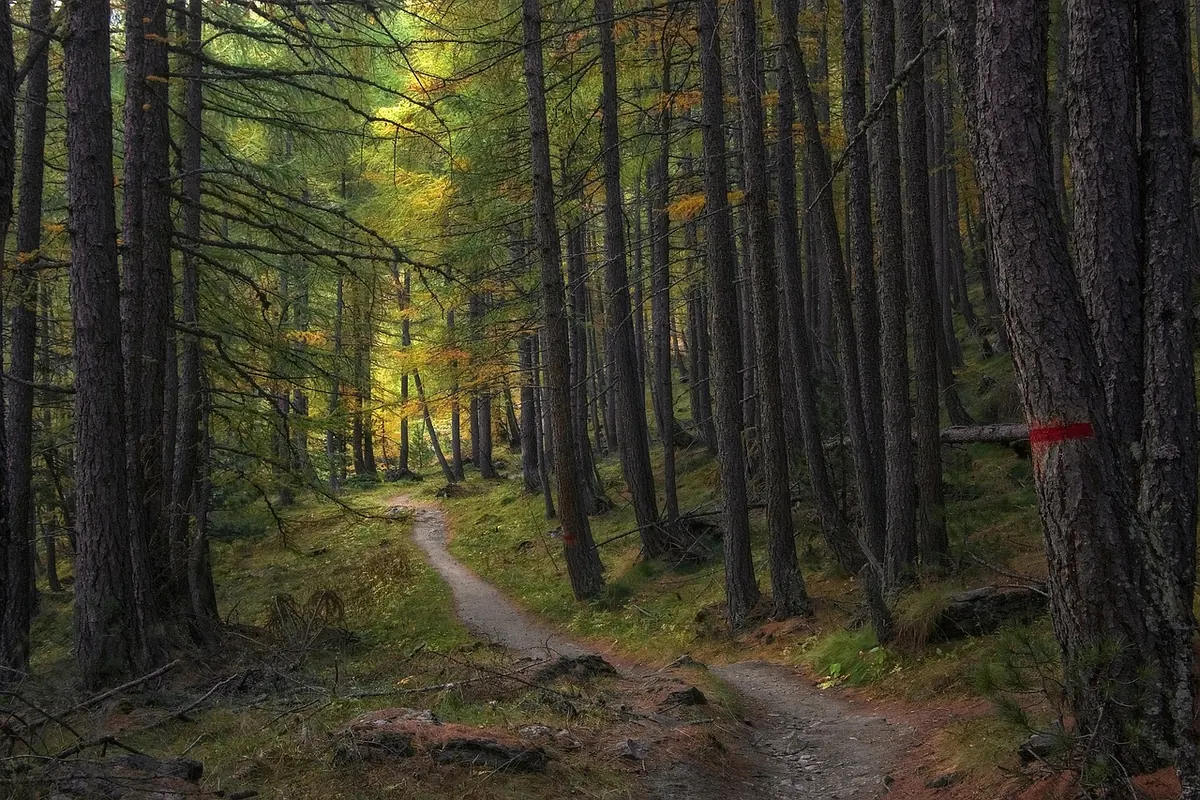
Whichever you plant, buy UK-grown stock from a nursery that can tell you the provenance, and give the trees room to develop a proper crown. A well-sited larch is one of the most rewarding trees in a British wood — quick, useful, and worth a walk in November just to see it turn.
Photo: Gaetan THURIN / Pexels
Related posts
More stories you’ll love reading